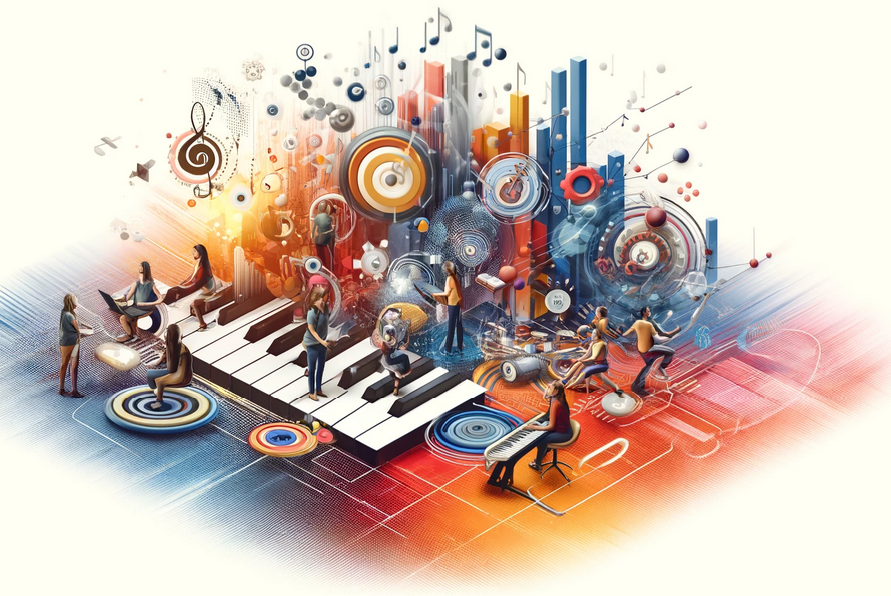
STREAMS - AI Music
The integration of AI-generated songs, with the possibility to be co-created and customised
by students utilising diverse genres of modern music, can significantly enhance teaching and learning,
fostering a more multi- literate and holistic development for students.
This innovation as delivered through the ‘eyes’ of our STREAMS avatars, under the VML framework, can be understood through the
following STREAMS (Science, Technology, Reading/Writing, Engineering, Arts, Mathematics,
Sustainability) vision.
1. Enhanced Engagement and Motivation
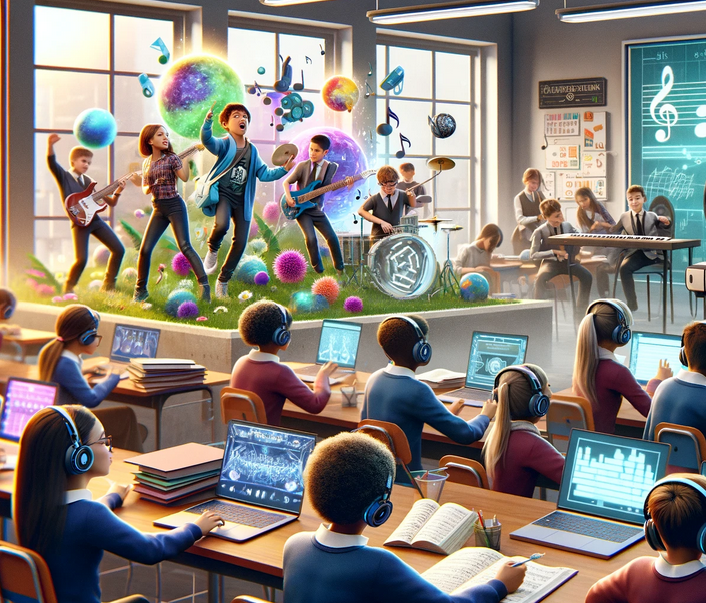
• Diverse Musical Genres: By leveraging AI-generated
music from various genres, teachers can cater to the diverse musical tastes of students,
making learning more relatable, personalised, and engaging. For instance, incorporating hip-hop beats in a
Science lesson or classical music in a Maths class can captivate students' attention and make the content
more memorable.
• Personalised Learning Experiences: AI can generate music created and tailored to
individual students' preferences, by themselves, thus promoting a personalised learning environment,
and an ownership of the chosen STREAMS topic. This personalisation can motivate and empower students
to engage more deeply with educational content, fostering a deeper and more meaningful love for learning.
2. Cognitive and Emotional Development
• Music and Memory: Music has a profound effect on
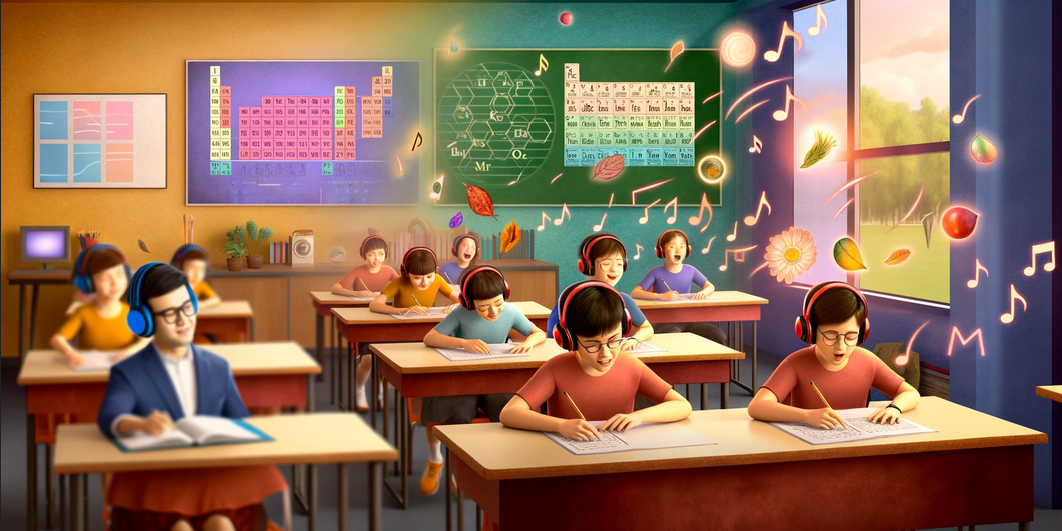
memory retention. AI-generated songs can be used to create mnemonic devices that help students remember
complex concepts and facts. For example, a science teacher could use a catchy tune to help students memorise
the periodic table.
• Emotional Resonance: Music can evoke emotions and help students of all abilities connect with the
material on a deeper and more engaged level. AI-generated songs that align with the themes of a
STREAMS lesson can create an emotional narrative, making the learning and multi-literacies’
experience more impactful.
3. Interdisciplinary Learning
• STREAMS Integration: STREAMS (Science, Technology, Reading/Writing,
Engineering, Arts, Mathematics, Sustainability) education can be enriched with AI-generated music,
an interdisciplinary approach. For example, students compose AI-generated songs in a music class that
explain scientific principles, integrating arts and science, maths, technology and engineering seamlessly.
• Cultural Literacy: Exposure to various musical genres, chosen by the students themselves, helps students
different cultures and histories, promoting inter and intra-cultural literacy and global awareness.
AI can generate songs that reflect the musical traditions of different cultures, enriching social
studies and history lessons.
4. Creative and Critical Thinking:
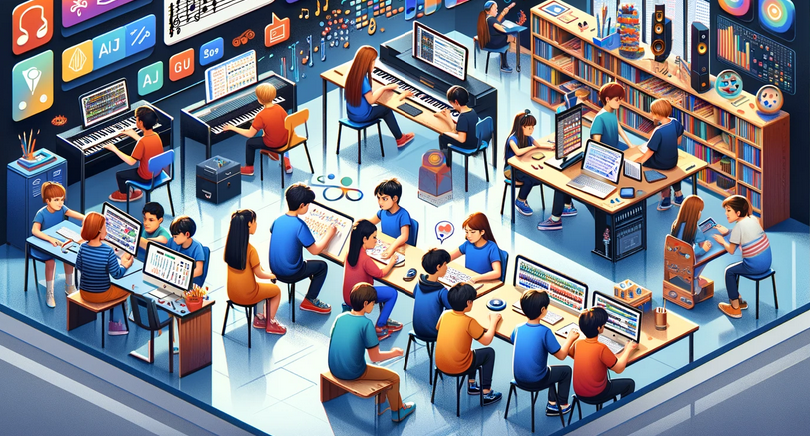
• Music Composition: AI tools like Suno.com engage, enable and
empower students to experiment with music composition, encouraging multi-literacy, creativity, and critical thinking.
Students can analyse and critique the music they customise and co-generate on suno.com, fostering analytical
skills and a deeper understanding of musical composition, theory and its application.
• Problem-Solving Skills: Creating AI-generated music involves understanding algorithms and programming,
thereby enhancing students' problem-solving and computational thinking skills, which are essential for
the 21st century.
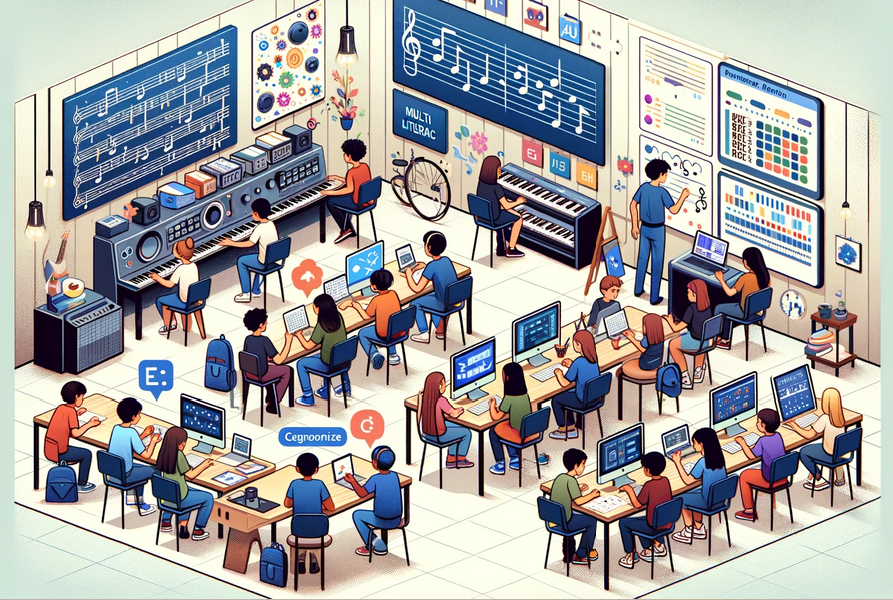
5. Holistic Development
• Social and Emotional Learning (SEL): Music can be a powerful tool for SEL.
AI-generated songs can be used in activities designed to develop empathy, self-awareness,
understanding of climate issues and problems, and social skills. For instance, students can
create songs that express their emotions or address social issues, promoting emotional intelligence and
multi-literacies.
• Inclusivity and Accessibility: AI-generated music can be adapted to meet the needs of students with
different learning abilities and styles. For example, students with auditory processing issues can benefit
from AI-generated music with specific rhythms and frequencies designed to aid their learning.
6. Future-Ready Skills
• Technological Proficiency: Using AI in music composition familiarises
students with advanced technology, preparing them for future careers in a tech-driven world. Understanding
how AI works in creative fields also opens up new career possibilities in music technology and digital media.
• Collaboration and Communication: Collaborative projects involving AI-generated music can enhance students'
teamwork and communication skills. Working together to create a musical project integrates multiple skill sets
and fosters a collaborative spirit.
.